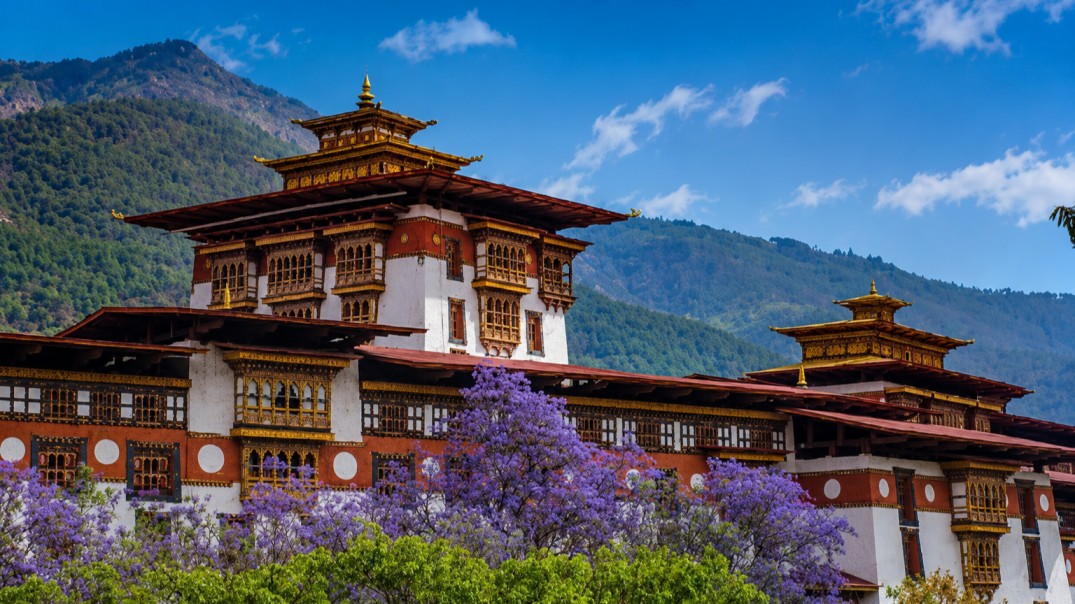
Tucked in the eastern Himalayas, Bhutan is unlike anywhere else in the region — a country that has deliberately kept mass tourism at bay, preserving its monasteries, forests, and traditional way of life. For travellers looking for something calmer and more distinctive than the typical Himalayan trip, Bhutan offers a genuinely different experience, though it does require more planning than most destinations.
Why Visit Bhutan
- Untouched Himalayan Scenery — Forested valleys, mountain monasteries, and a landscape that feels remarkably preserved
- Iconic Monasteries — The cliffside Tiger’s Nest (Paro Taktsang) is one of the most recognizable sights in the Himalayas
- A Different Pace — Bhutan’s tourism model keeps visitor numbers controlled, so sites rarely feel crowded
- Strong Cultural Identity — Traditional dress, architecture, and Buddhist practices are woven into everyday life
- Genuinely Unique Trip — For travelers who’ve done the more typical regional destinations, Bhutan stands apart
Where to Go & What to See
Paro is where most visitors arrive, and it’s also home to Bhutan’s most famous sight — Paro Taktsang, the Tiger’s Nest Monastery, perched dramatically on a cliff face roughly 900 metres above the valley floor. Reaching it involves a hike of a few hours each way (with the option of a mule ride partway), and it’s widely considered one of the most rewarding treks in the region for the views alone. Paro town itself, along with the National Museum housed in an old watchtower, is worth a half-day before or after the hike.
Thimphu, Bhutan’s capital, blends traditional architecture with a small, distinctly low-key city life — there are no traffic lights in the entire capital, and traffic is directed by hand at the main intersection. The Buddha Dordenma statue overlooking the city, the weekend market, and the Tashichho Dzong (a fortress monastery that also houses government offices) are among its main sights.
Punakha, a few hours from Thimphu over a mountain pass, is home to Punakha Dzong, widely regarded as one of the most beautiful fortress-monasteries in Bhutan, set at the confluence of two rivers. The drive there, crossing Dochula Pass with its 108 chortens and Himalayan views on clear days, is itself one of the highlights of a Bhutan trip.
Phobjikha Valley, a glacial valley further from the main tourist route, is known for its wide-open scenery and, in winter, the arrival of rare black-necked cranes migrating from the Tibetan plateau — a detour worth considering for travellers with more time and an interest in nature.
Most Bhutan itineraries follow the same general route — Paro, Thimphu, and Punakha — since travel within the country is arranged through licensed operators as part of a structured trip rather than independent point-to-point travel.
Best Time to Visit
Spring (March-May) and autumn (September-November) are the best times to visit Bhutan, with clear skies, comfortable temperatures, and the best mountain visibility. Winter can be very cold, especially at higher elevations, while the summer monsoon brings heavy rain to much of the country.
Why Travel to Bhutan With TravoWay?
Bhutan’s tourism model requires travel to be arranged through a licensed operator, which makes planning ahead essential — and it’s exactly where we can take care of the details:
- Licensed Operator Arrangements — Handling the required licensed-operator booking and Sustainable Development Fee as part of your package
- Custom Itineraries — Routes built around the classic Paro-Thimphu-Punakha circuit, with Phobjikha Valley added for travelers with more time
- Tiger’s Nest Hike Support — Guidance on pacing the hike, mule options, and the best time of day to go
- Verified Hotels & Guides — Accommodation and local guides arranged through partners we’ve worked with before
- 24/7 Support — We’re available throughout your trip for anything you need
Travel Tips
- Bhutan requires travelers to book through a licensed tour operator and pay a Sustainable Development Fee, which is factored into most organized trips
- Because of controlled tourism, planning is essential — Bhutan isn’t a spontaneous, walk-in destination
- Modest dress is appreciated, especially when visiting monasteries and dzongs
- Given the altitude in many areas, allow time to acclimatize, especially if trekking to Tiger’s Nest
How Long Should You Plan For?
A standard Paro-Thimphu-Punakha circuit works well over 5-6 days, giving enough time for the Tiger’s Nest hike, Thimphu’s main sights, and the drive to Punakha without feeling rushed. Adding Phobjikha Valley typically extends the trip to 7-8 days. Since flights into Paro are limited and weather-dependent, it’s worth building in a little buffer time around your arrival and departure dates.
Curious about Bhutan? Since travel here needs to be arranged in advance, let us know your interest early, and we’ll help put together a plan.