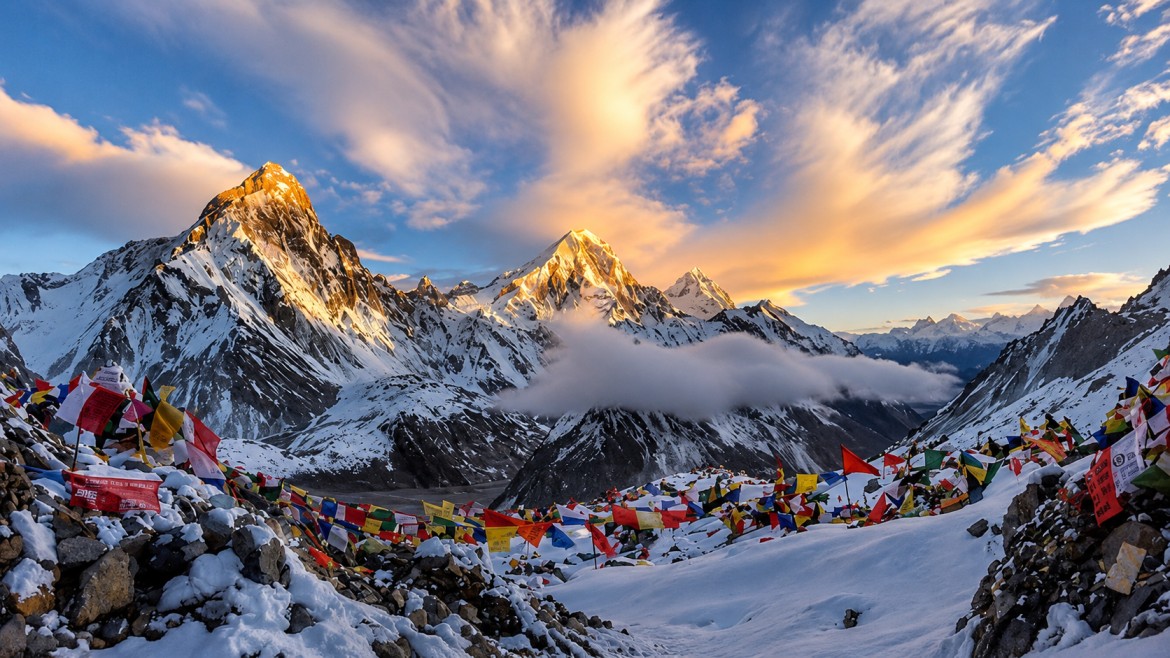
Home to eight of the world’s ten highest peaks, Nepal is the go-to destination for travelers chasing mountain views, trekking trails, and a rich blend of Hindu and Buddhist culture. Kathmandu’s ancient temples, Pokhara’s lakeside calm, and the sheer scale of the Himalayas make it a rewarding trip for both adventure seekers and those who simply want to take in the views. It’s also one of the more accessible mountain destinations from Bangladesh, with direct flights connecting Dhaka and Kathmandu.
Why Visit Nepal
- The Himalayas, Up Close — Even without a full trek, cities like Pokhara and Nagarkot offer stunning mountain views
- Trekking for All Levels — From short day hikes to multi-day treks like the Annapurna and Everest Base Camp routes
- Rich Cultural Heritage — Kathmandu’s Durbar Squares, ancient temples, and a strong Hindu-Buddhist cultural mix
- Affordable Adventure — Nepal remains one of the more budget-friendly destinations for the experience it offers
- Compact Distances — Kathmandu, Pokhara, and Chitwan are all reachable within a short domestic flight or drive
Where to Go & What to See
Kathmandu is where most Nepal trips begin. The city’s three Durbar Squares (Kathmandu, Patan, and Bhaktapur) are packed with centuries-old palaces and temples — Bhaktapur in particular feels like stepping into a medieval town. Swayambhunath, known as the Monkey Temple, sits on a hilltop with panoramic views over the valley, while Boudhanath Stupa, one of the largest stupas in the world, is a major centre for Tibetan Buddhist culture. Thamel, the city’s tourist hub, is worth a walk for shopping, trekking gear, and its lively restaurant scene.
Pokhara, a short flight or scenic drive from Kathmandu, sits on the edge of Phewa Lake with the Annapurna range rising directly behind it. Boating on the lake, visiting the World Peace Pagoda for valley views, and — for the more adventurous — paragliding over the lake and hills are among its most popular activities. Pokhara is also the starting point for treks like the Annapurna Base Camp and Poon Hill routes.
Chitwan National Park, in Nepal’s lowlands, offers a completely different experience — jungle safaris by jeep or on foot, with a good chance of spotting one-horned rhinos, along with elephants, deer, and a wide range of birdlife. It pairs well as a 2-day add-on to a Kathmandu-Pokhara trip.
Nagarkot, just outside Kathmandu, is a popular short trip for travellers short on time — known for sunrise views over a wide stretch of the Himalayan range, including Everest on a clear day, without needing to trek or fly anywhere.
For travellers interested in trekking beyond day hikes, the Poon Hill trek (around 4-5 days) is a good introduction, offering mountain views without requiring high-altitude experience, while routes like Annapurna Base Camp or Everest Base Camp are longer, more demanding options for experienced trekkers.
Best Time to Visit
Autumn (October-November) is widely considered the best time to visit Nepal, with clear skies and comfortable temperatures ideal for both sightseeing and trekking. Spring (March-May) is also a good option, especially for rhododendron blooms on trekking routes. Monsoon season (June-September) brings heavy rain and reduced visibility in the mountains, while winter (December-February) is cold, especially at higher altitudes.
Why Travel to Nepal With TravoWay?
Nepal trips often combine city sightseeing, mountain viewpoints, and sometimes trekking — getting the logistics and permits right makes a real difference:
- Custom Itineraries — Whether it’s a relaxed Kathmandu-Pokhara trip or a trip that includes trekking, we plan around your fitness level and time
- Trekking & Permit Support — Guidance on required permits and connecting you with experienced local guides for trekking routes
- Verified Hotels & Transport — Domestic flights, drives, and accommodation arranged through partners we’ve worked with before
- Altitude-Aware Planning — Itineraries that account for acclimatization if your trip includes higher-altitude stops
- 24/7 Support — We’re available throughout your trip for anything you need
Travel Tips
- Bangladeshi travelers need a visa, which can typically be obtained on arrival at Kathmandu airport
- Altitude matters — if trekking to higher elevations, plan for acclimatization days
- Cash is still widely used outside major hotels and restaurants, so carry Nepali rupees for smaller purchases
- Domestic flights connect Kathmandu with Pokhara and other regional hubs, saving significant travel time over road trips
- Pack layers — mornings and evenings can be cool even in cities like Pokhara, and considerably colder at higher elevations
How Long Should You Plan For?
A relaxed Kathmandu-Pokhara trip, without trekking, generally works well over 5-6 days — enough time to explore Kathmandu’s temples and squares, then unwind by Phewa Lake in Pokhara. Adding Chitwan for a jungle safari typically adds 2 more days. If a short trek like Poon Hill is part of the plan, budget at least 8-9 days in total, since the trek itself takes 4-5 days on top of time in Kathmandu and Pokhara. Longer treks such as Annapurna Base Camp or Everest Base Camp need considerably more time — often 12-16 days — and should be planned well in advance.
Thinking about Nepal? Whether you want a relaxed lakeside trip or a proper trek, let us know your interests and travel dates, and we’ll help you plan it.